We are at the one-year anniversary of the week that we spent with Hannah in the hospital before her passing and the organ donation. We are going back through those posts and replying to people who commented. Yes, it is a bit late, but I’m sure that you all understand that there was no time to really be managing everything that was happening on Facebook and now it seems appropriate to do so on the anniversary. Looking back, we are reminded again of how amazing the network of supporters was and how quickly it grew. Even though some people have “moved on” from Hannah’s story, many of those friends are still reading our posts today, and we are very thankful for you! So, as we reply to these comments this week, it looks like you will be seeing last year’s posts popping again up on your Facebook feed. No, this is not happening all over again, we are just remembering everything that happened with Hannah one year ago, and also remembering the amazing support that we received from all of you.
As we mentioned previously, we had the opportunity to share Hannah’s Story on the radio this past Monday on VCY America. Jim Schneider, the executive director of VCY America, was kind enough to let us be on his afternoon Crosstalk program. It was a very special experience! Two days later, on Wednesday, we had the opportunity to do something else very special. That was to see Maranatha, Hannah’s college, become the first anaphylaxis prepared college campus in the state, and likely the country. BUT “What does that mean?” you ask. It means that they have actively taken steps to make their campus more aware and prepared in the event of an allergic/anaphylactic reaction. These steps include a variety of things, but for time’s sake I will focus on what I believe to be the two biggest steps that all colleges and schools need to take.
The first step was to post epinephrine in public locations for emergency public use. This means that in the event of a severe anaphylactic reaction, there is an Epinephrine Delivery System (EpiPen, Neffy, Auvi-Q, etc.) readily available nearby. This is important for two main reasons: 1. Not everyone knows that they have an allergy before having a reaction. Unfortunately, allergy testing typically is not done until after the first reaction and people can also develop allergies as they get older. So, testing as a child does not mean that you are “set for life.” It only means that those things are what you are allergic to at that time of testing. 2. Many people with known, potentially severe allergies do not always carry their epinephrine with them. Why not!? Probably because they forget it, or it can be “inconvenient”, or, with there often being a considerable amount of time passing between allergic events, they are lulled into a false sense of security and choose to leave it behind. This is an irresponsible decision, YES, but how often do people always make the responsible decision at the expense of convenience, especially as young people? So, MBU now has epinephrine in their AED emergency locations, in their “to go” bags for traveling sports and music teams, with their security team, and in other public locations around the campus.
The second main step that they took was to begin anaphylaxis and epinephrine training. Even though the EDS are available, they don’t do much good if no one knows how to use them. Someone suffering from a reaction for the first time will likely not know what to do. And, we have found that many people with EDS don’t really practice using them and often they don’t even remember how to do it. Further, in the event of a severe anaphylactic reaction, the patient’s judgement can be clouded to the point that they can’t self-administer the EDS or in some cases, they lose consciousness quickly and must rely on someone else to recognize the signs and save their life.
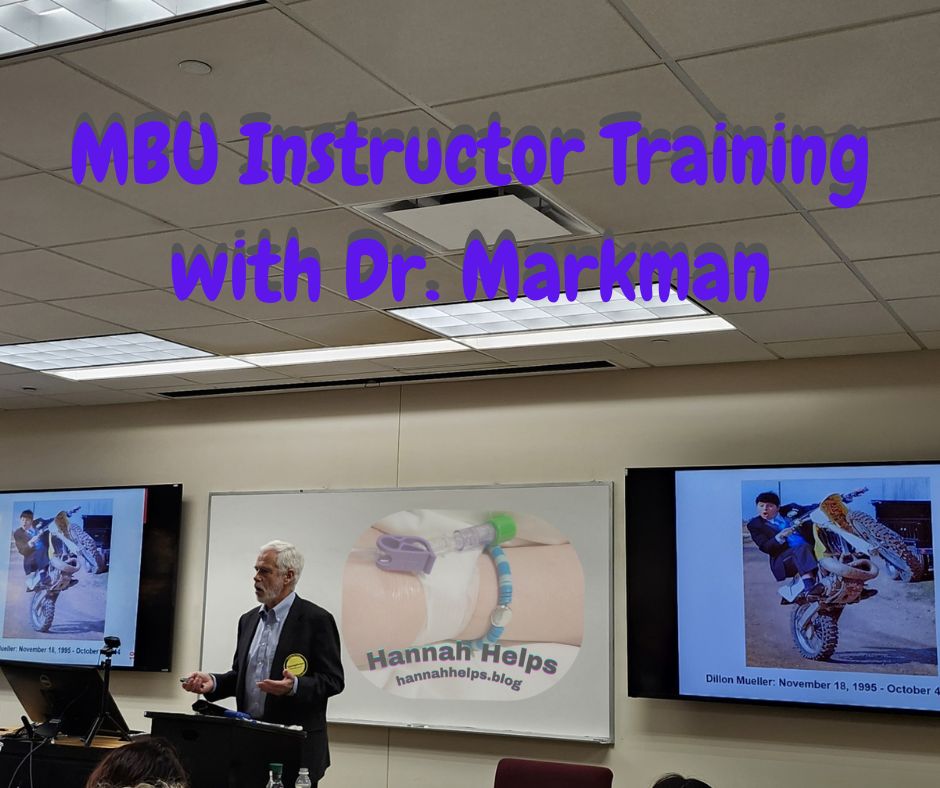
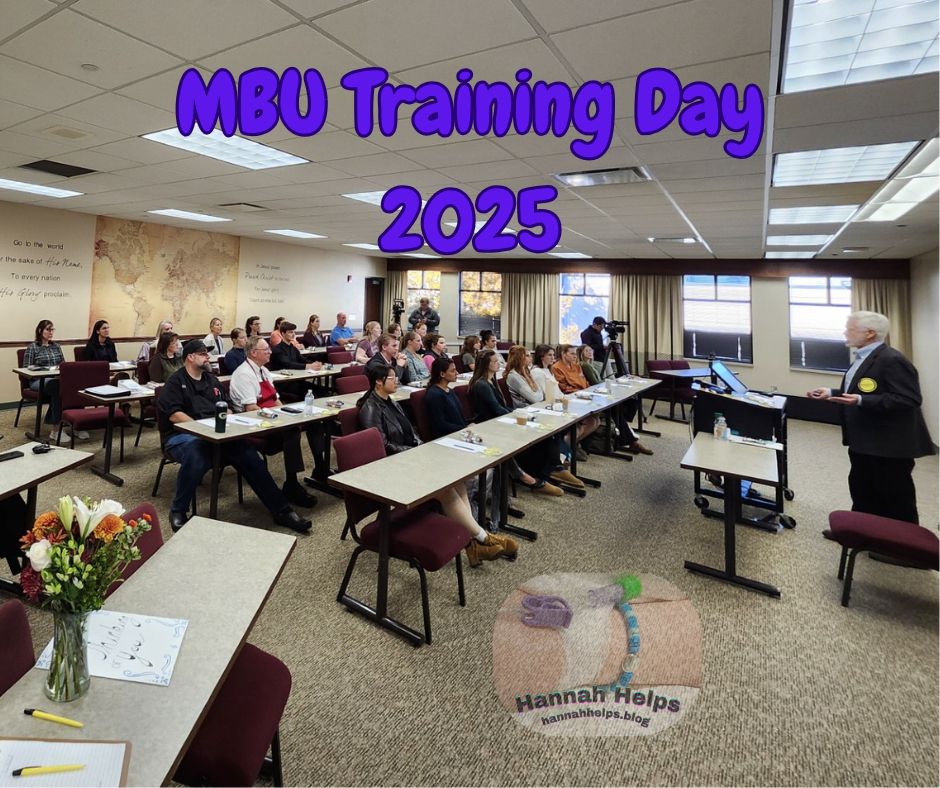
This training was the main reason that we were at MBU this week. Through the Muellers, and with Dr. Markman, we have begun to raise awareness of the need for anaphylaxis prepared campuses. MBU was the first college to step up to the plate and actively take these steps. This week we met to train instructors in the Do It for Dillon, State of Wisconsin approved, training program. Dr. Markman led the training which lasted 90 minutes and MBU now has their own instructors in the recognition of anaphylaxis and the use of EDS. These instructors, many of whom are in the nursing program, can now train MBU staff, students, and the public. It was an amazing day and a great way to honor Hannah during this anniversary week!
“Why was this necessary?” you may be wondering, “Doesn’t every school and college do that?” Unfortunately, the answer is a big fat “NO”! They don’t do it for reasons including, complacency, cost, and perhaps liability purposes. Here is an example: I walked into a local elementary school and saw their two emergency boxes in the public space, just inside the entrance to the school. They have an AED, CPR mask, and an overdose kit in these boxes. Is that bad? No, BUT what are the odds that an elementary student would suffer a heart attack, need CPR, or come to school and overdose? Again, those are “good things” that they are required to have, but as I enter the school’s cafeteria, right next to those boxes, I see a special table, custom made, that labels it as the table for kids with food allergies. So, on one hand we are prepared in the unlikely event of heart attack, not breathing, and overdose, but not for anaphylaxis. Meanwhile there is a special table purchased and used because there is an obvious recognition of the problem that these allergies pose. Of course, there are other allergens besides food. If a kid gets stung by a bee while at recess or in a soccer game, where is that EDS and who needs to be found and how long will it take that person (likely a school nurse) to actually get to the child and administer it? So, in our opinion, the more accessible EDS are and the more people that are trained in their use, the more lives that will be saved in those precious moments that matter. If a ten-year-old can be trained to use it, why not the rest of us?
Here’s a bit of homework. I challenge you to pretend, for one day, that you, your spouse, your child, your grandchild, or your friend are having a serious anaphylactic reaction and it’s up to you to save them. Yes, the directions are on the EDS, so for this exercise, all you need to do is find an EDS. Can you do it at school, at work, at church, at the store, in the park, or on your walk? In the event that you can, how long did it take you? Just give it a try and you will see how woefully unprepared we are.

As we were at this event, we also had two news reporters there to see what we were doing “one year later.” One was from WKOW 27 in Madison. Lucas interviewed us after we lost Hannah last year. He was able to return this year to see the good that is coming out of our loss. Here is a link to his report: https://www.wkow.com/news/top-stories/milton-family-honors-daughters-life-through-anaphylaxis-epinephrine-training/article_c4b7f5ad-d8fe-4003-a89e-92620288f197.html The other station that came was CBS 58 out of Milwaukee. This station sent a different reporter last year, but this year we were able to meet Pavlina. She, like Lucas, was very nice. She interviewed us and one of Hannah’s friends that was being trained, and they also took other shots of the training. At one point she even borrowed a couple of EDS training devices to demonstrate for the camera on herself. Here is a link to her story: https://cbs58.com/news/its-that-serious-family-turns-pain-into-purpose-after-losing-daughter-to-peanut-allergy-holds-lifesaving-training-course
Anyway, we are still hard at it. Having these opportunities during this week does help to ease some of the hurt that we feel. It is nice to see the good that has come about from our loss too. We could not have ever asked for this, but here we are doing whatever it is that we do and going wherever it is that He leads.
Thank you all!
We are blessed
 Hannah Helps Blog