
A few days ago, I explained the events that took place, ending with us returning home after the Honor Walk. As has been mentioned in previous posts, after realizing that we were at the end of Hannah’s life here on earth, I contacted Dr. Anderson, the President of Maranatha. He was willing and able to officiate the funeral. With the funeral needing to take place only a few days after her passing, there was no break in things to do. We spoke with Dr. Anderson that Sunday afternoon about preliminary funeral things, then spoke with Michael, from the funeral home later that same evening. Although things changed dramatically that day, they did not “end” that day. We discussed a few arrangements with Michael and then set up a time to meet with him and Dr. Anderson. We got what rest we could that Sunday evening. On Monday, we woke up, talked a little, cried a little, then got ready and drove up to Watertown to the funeral home. During this time, we kept our boys as involved as was possible. We invited them to “help” us make these plans and decisions. (As parents, involving our children in our lives is the best way to teach and instruct them.) Micah came to the funeral home with us, but the other two chose to stay home. We had a good meeting at the funeral home. We told them a few songs that we would like to have at the funeral, and we were given a few small jobs to do. They needed a picture for the bulletin, and they also needed two things written: a testimony of Hannah’s life and a eulogy. (Both of these have been posted already and are still available) We also discussed the question of how we would handle Hannah’s remains, for the funeral and for the future.
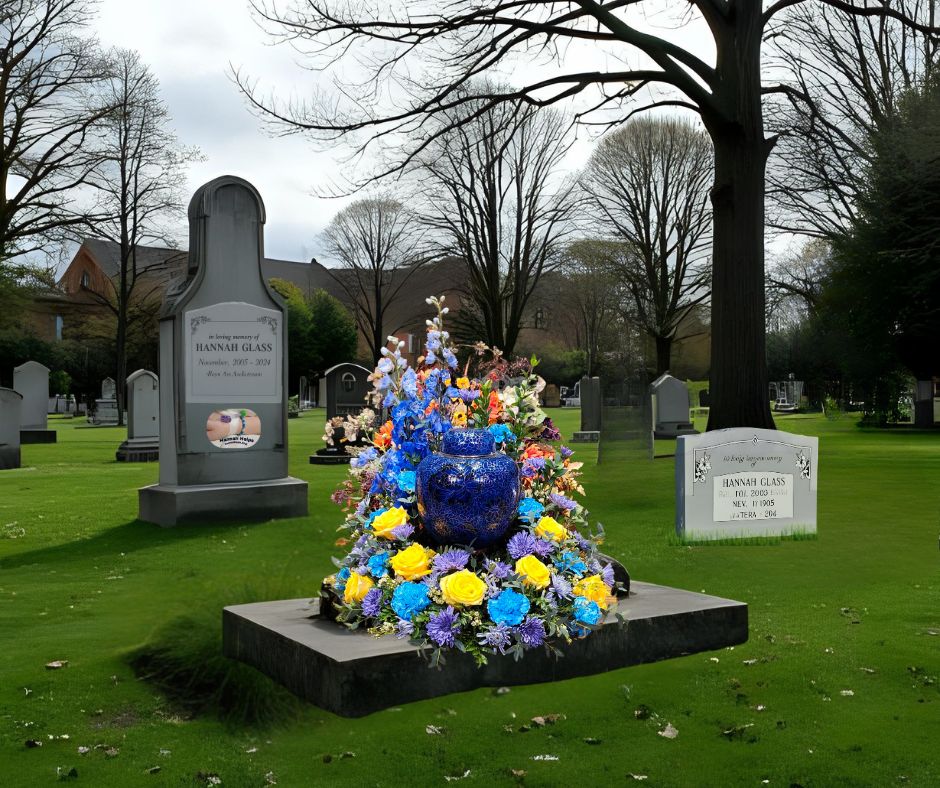
These were all new experiences for us. We had never had to do anything like that before, but the Lord was with us. He helped us through, and we were and still are very happy with our decision to have her remains cremated. This is a decision that some people may disagree with. Each of us have our own “opportunities” to decide these things for ourselves. I do realize that most people would prefer open casket and burial. Under different circumstances, likely, we would have too. There were several factors that made our decision easier. First was that the organ donation process takes quite a bit of time to complete, then there is the legal end of things that takes time as well. In all, I do not think that the funeral home was able to get the remains back until the end of the week, then there still was investigation, examination, and paperwork that the county coroner needed to do before the body could be handled by the mortician. It ended up taking ten days or so before the funeral home could have done anything with the remains, and we only had three. Second, although an open casket could have been an option, after the donation process was completed, the feasibility and cost of doing so was not a possibility for us. Third, we didn’t have a burial plot. This was obviously unexpected, and we didn’t have any of these things prearranged for our daughter. So, in the end, the timeframe, condition of the remains, and the finances all meant that there was no actual decision to be made. We also appreciate having Hannah’s urn at home with us. It’s nice to not have to go to a cemetery to “visit her”. Cremation certainly can involve permanent entombment at some point, but it also provides a lot of flexibility.
Burial is more of a Biblical precedent, but never commanded. If our God can create this world out of nothing, if He can then make mankind out of the dust of the ground, then He can bring about some form of a bodily resurrection years to centuries after someone’s passing, then it seems likely that cremation would not hinder His “abilities”. Also, I don’t believe that cremation has any negative connotation in this day and age.
Let me explain why I think that connotation is important. Way back when I was in school, I remember learning about denotation and connotation. Denotation is the literal meaning of a word. Connotation is more of the perceived meaning of a word today. When we say that something is hot, the denotative interpretation would be that it has an excessive amount of heat. Like a hot stove. We can also say something is hot, but in a connotative sense, such as a barbeque chicken wing can be “hot” in a spicy sense. Chili is a great winter food that can be hot, and when the person eating it remarks on its “hotness”, often the resulting question from someone else is, “Is it temperature hot or spicy hot”. (Denotation vs. Connotation) In my mind, this is similar to what the Apostle Paul was saying when he was speaking of things that may be “lawful” but not “expedient”. (I Corinthians 6:12-20) In this passage Paul points out that there is more to Christian living than just maintaining that “lawful” or “denotative” standard. By lawful, I mean those things that we believe that God does not hinder us from doing. The “expediency” or the “connotation” is also equally or possibly more important. In chapter 8 of the same book, he uses the subject of meat that was offered to idols. He says that since these idols didn’t actually exist, he could “lawfully” or in his “liberty”, eat the meat. UNLESS it would be witnessed by those around him who would believe it to mean that his participation implied that he was acknowledging, worshiping, or serving the idol that it had been offered to. Our life on this earth is about more than just a “lawful” duty before God. It is also about a connotative/expedience before others. In I Corinthians 8:9-11, Paul warns that we, by our “lawful” actions, can not allow those actions to cause someone else to stumble (vs 9), and in our “knowledge”, “cause someone else to perish, for whom Christ died.” (vs 11) As we go throughout our day, are we aware of what our lives, in character, conduct, and speech are saying to others? If we use our “Christian Liberty” only in a lawful manner, to do what we want to do, we then may be causing someone else to stumble. It’s never right to do wrong, but in this context, it can be wrong to only focus on doing what’s “right” (acceptable or legal). The love of our Savior and commands such as these compel us to think of others and our influence on them, as being more important than ourselves. (Philippians 2:3)
So, with no Biblical reason we couldn’t use cremation, no connotative reason to not make this choice, a short timeframe, limited finances, no burial plot, and a great deal of flexibility provided; we chose cremation.
We are blessed.
 Hannah Helps Blog