Moments after climbing into bed on the night of November 4th, the silence was interrupted by a phone call. It was from our daughter, Hannah. She was scared, frustrated, and uncomfortable. She told us that she had eaten a bite of a brownie that was made with peanut, by mistake. Although we knew that she had this allergy, it had only been an issue twice in her life. The first was at the age of three and we took her to the doctor where we received our first EpiPen. The second event came at the age of six and followed the same pattern as the first. Both encounters came as a result of her inadvertently taking a bite of something with peanut butter in it. Each time she never had a chance to chew, let alone swallow, before her body began to throw up. Neither one of those events, though scary in the moment, were life threatening. After a brief bout of intense nausea followed by a rash, that disappeared within thirty minutes, with the help of a little Benadryl, she had returned completely back to normal. As Hannah grew older, she would tell us that she could sense if something was made with peanut butter. She would say that if she touched it, and especially if she brought it up to her nose or mouth, her body would physically revolt against that food, and she would put it down, no worse for the wear. It was her body’s natural warning mechanism.
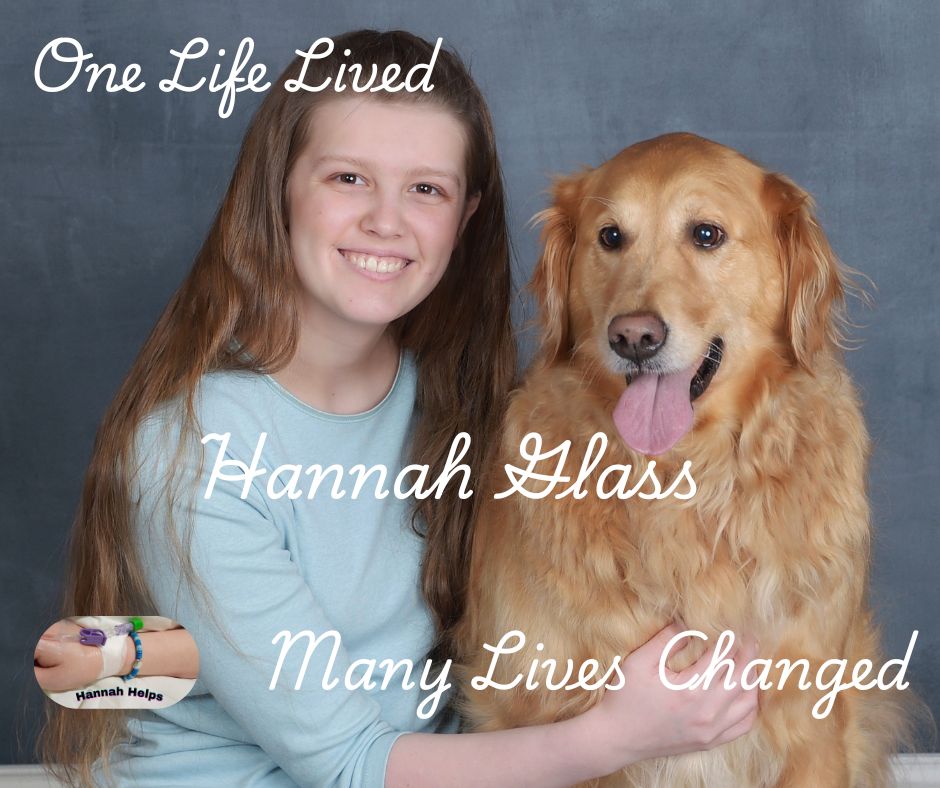
Hannah was an amazing girl, with an incredibly strong character. She loved people, school, playing the piano, and working towards accomplishing her goals. Her one big goal in life was to go to college to learn how to become an English teacher. She wanted to teach English, both written and spoken, to others as they were learning it in school or even as a second language later on in life. This drive and her exceptional character compelled her to get her first job at sixteen as a waitress so that she could begin saving for college. Homeschooling allowed her the opportunity to learn at her own pace. She would get up and start school at six in the morning, then after a few hours, she would go to work. There she was well known by coworkers and customers alike for the joy she found in serving others, her attention to detail, and also for her constant smile. After her shift ended, Hannah would return home to finish her schooling, often staying up late into the night. Her diligence, character, and ambition allowed her to save enough money to pay for her entire four-year education, when it was combined with the grants and scholarships that she secured for herself. She also got involved in church ministry as soon as she could. She played the piano for services and quickly became an integral part of the children’s ministry. She rode the van that picked up and dropped off the children. She led in their programs, knew each child by name, and listened to them as they told her about their day and their lives. They loved her and they knew that she loved them. This evident love and character was founded on her relationship with God, and that relationship was clearly visible to all those around her. Two days before the accident, she volunteered at a ministry that she loved which prints Bibles. These Bibles are then sent overseas to reach an untold number of people with the story of God’s love. Making Bibles is what she wanted to do to celebrate her birthday that weekend. Hannah turned nineteen the following day and she spent that Sunday at church worshiping the Lord and serving others.
As we raced to her dorm room to be with her that next night, Monday, November 4th, we learned that this time, she had been able to actually chew and swallow this bite of brownie, without it triggering her natural alert to the presence of peanut in it. (In hindsight, this seems to be because these brownies contained peanut flour rather than peanut butter. They were made for a gluten free group, and not actually for Hannah herself.) Her symptoms, although a little more severe this time, were following the same pattern as the two previous times. We kept her on the phone as we quickly drove to be with her, and upon arriving, we found her to be calming down and feeling better. Her stomach was not bothering her as much and her rash was disappearing. Everything was as it had been those many years before, until she laid down to rest, then she began complaining of increased discomfort and difficulty breathing. As she was getting down out of her bed, she lost consciousness. The last thing she knew was that we were there and helping. Her EpiPen was administered but did nothing to help. 911 had been called too, and we quickly brought her down and outside to the ambulance, where they began life saving measures. While in the ambulance, her heart stopped for several minutes, but they were able to restart it. Oxygen was administered as they tried to breathe “life” back into her, but there were complications. It was a short ride to the hospital where she was immediately placed on a ventilator, but her blood oxygen remained dangerously low, and the doctors tried frantically to figure out why. Both the EMTs and the doctors at the emergency room could not understand why things had gone so bad so quickly. In time they learned that one of her lungs had collapsed. This caused the sudden change in her dorm room and prevented the ventilator from being able to provide her body with enough oxygen. After a quick procedure to insert a chest tube to reinflate the lung, her blood oxygen numbers returned to normal, but in the end, it was just too late. Hannah never regained consciousness and over the next six days we watched as the damage done by the lack of oxygen to her brain that night ran its terrible course.
During those long dark days and nights, as the outcome that we most feared became more and more evident, we began to think about organ donation. This had never been a discussion or really even been a consideration before, since no one expects this kind of tragedy to happen. In the darkness of the hospital room, after everything possible had been done and her body was beginning to shut down, in the deepest despair imaginable, we knew that we needed to donate her organs. If we could literally save lives, if we could keep other families from feeling this depth of pain, if we could show the kind of love that Hannah embodied, and if we could show the kind of love that her Savior, Jesus, embodied, then we knew that we must donate her organs. This is called, the “Gift of Life.” The next day we walked beside her bed, as it was rolled down a hallway lined with people who came to honor her life and our decision. Our hearts were broken as we arrived at those operating room doors where we said our final goodbyes before she went in and her life ended, as we knew it. As deeply as we were hurting, however, we could also imagine that as her life ended and our hearts were breaking, there were others whose lives were being saved and there were families that now had hope. In the end, Hannah’s sacrifice was able to save four lives, and we knew that she would be proud of this.
In some ways this parting at those cold stainless-steel doors, shortly before Thanksgiving, reminded us of Jesus’ death on the cross. Although clearly not the same, yet, as her life ended, it was necessary for this to happen so that others would get a chance to live. You see, saving lives comes only by great sacrifice. The Bible makes this clear as it tells us that we are all sinners and that we have fallen short of God’s standard. (Romans 3:23) Looking at the world around us and carefully, honestly examining our own hearts and lives reveals this too. In Romans 6:23 we read that the wage our sin pays is death. Death is the “paycheck” that we earn for our sin. This kind of death is an eternal separation from God, but the good news then is given as the same verse goes on to tell us that there is a gift offered to us from God which, if accepted, will cancel out that sin debt and grant us eternal life. That gift came through the sacrificial death of Jesus, the Son of God, on our behalf. He lived a perfect, sinless life and only went about teaching truth, loving, and healing. Yet it had always been the plan, from before the founding of the world, that He would come to earth as a man, and lay down His life. He did this so that all those who accept Him as their “Gift of Life”, as their gift of their salvation, may live! Jesus, speaking of His own love in John 15:13, says, that there is no greater love than when someone sacrifices their own life for their friend. This “Gift of Life,” of an eternal life with Him, having had the penalty of sins paid by Him, can only be received by someone who comes to Him in simple, humble faith and asks Him for it. Romans 10:13 tells us that anyone who calls on His name for forgiveness will be saved.
So here we are my friend. At a young age, Hannah acknowledged to God that she was a sinner, she repented of that sin, and she accepted God’s “Gift of Life.” The acceptance of this gift is what laid the foundation for Hannah’s unique life, and though many would say it ended prematurely, yet perhaps, in God’s plan, its impact could only have been seen best by this “tragedy.” In her life and even in her passing, many lives have been affected. Her life is just a small picture of the life and love of her Savior and God, with whom she now will live forever with Him and all those who believe and accept His “Gift of Life.” I ask you now, my friend, what will you do with the story of Hannah, and more importantly, what will you do with the story of her God? If you would like to accept this free gift for yourself, simply pray in humble, honest faith, “Dear God, I am sorry that I have sinned. I would like to accept your amazing gift of salvation for myself. Please come into my life and save me.” Jesus said in John 6:37, “… him that commeth to me: I will in no wise cast out.”
To learn more of Hannah’s story or to learn more about her Savior and the new life you can have in Him, please scan the QR code and visit hannahhelps.blog. Through both the good and the bad times we face in life, we have learned to always remember that: We Are Blessed!

 Hannah Helps Blog