Last night was the first night back at church for our kids Bible Club program. I drive the church van for this and pick up the kids. It was a cold, dark, and windy night, but the kids were ready and excited to come. They seemed happy to get out of their homes and to come to Bible Club. I just began driving the van a few months ago after the loss of my job. Before that, I was not home in time to be able to do it. Janean and Hannah, however, have been helping with Bible Club for a while now. Last night was a reminder, again, that this thing we call “healing” is like walking on a tight rope or walking on thin ice, at any moment things can go down quickly. Prior to her passing, Hannah was my copilot. She would tell me where to go, who we should be expecting, and then jump out to get the kids and bring them safely to the van. Last night though, she was not there. Things went well, but for me, they were definitely not the same.
I enjoy driving the van and seeing the kids but doing it with my daughter was extra special. So, last night there were several reminders of her absence. She was not already at church when we arrived, she was not in the passenger seat, and she was not there to tell me that I was about to miss my turn. There were times when I was about to ask her a question but then caught myself. This is an example of the kind of “holes” that I am talking about. Maybe it’s like Jenga, the game with the tower of stacked blocks. Each player gets a turn to remove one piece until the remnants of the tower collapse on the loser. Our lives are like those towers, but not all of the blocks are ours. Some of those blocks are pieces formed by other people who play an integral part in our lives. When those blocks are removed by their absence, parts of our lives seem to be shaky and unstable. Yes, our lives are integrally connected with the lives of others. This isn’t a new concept though. Paul, in the Bible, uses a better analogy. He speaks of us, believers in the Lord specifically, as a body.
In I Corinthians 12:12-27, Paul explains to us that first of all, we are all different. We are different ages, come from different backgrounds, have had different life experiences, and we actually have different “gifts” given to us by God. In our society today, we equate “equality” to “sameness”. Equality is good, but sameness is not. Things can be different, yet equal. Four quarters are equal to one paper dollar bill, but they are clearly not the same. In our “body” we are equal before God in value, but we are not the same. We each have a unique design and purpose. Unfortunately, the differences are typically what can lead to division, but what Paul is saying in this passage is that the strength of the whole is built on the diversity of each individual “member”. We naturally would prefer to surround ourselves with people only like us, but to that he makes a joke by saying that if we were all the same, we would just be like one big eye or ear. A six-foot eyeball is no body!
Maybe we act as if our involvement or absence doesn’t matter. This is untrue as well. Paul points out that even when one member is suffering, it affects the whole. He mentions that if one of our “uncomely” parts is suffering, the whole body suffers. This is easily understood when we stub our little toe. First of all, that little thing is not “comely”, as he describes this type of part. We do our hair, brush our teeth, some put makeup on, but we don’t really prep our little toe for the day. I just throw on a pair of socks, slip it into a shoe, then go about my day without ever thinking about it, UNTIL I stub it! After that, very little matters. In those moments immediately following the “stubbing”, the soreness in that toe is all that matters. Although this is referring to a suffering member, the absence of a member is also catastrophically felt. The working body is a tight knit group of unique individual members, “fitly joined and compacted together” (Ephesians 4:16). Each member is working together in unity, doing its part to support, strengthen, and operate as a whole. We all have heard the saying, “I lost my right-hand man,” This is what is being said, “A major part of me, that was not my own, is now absent and I am not able to function normally without it”.
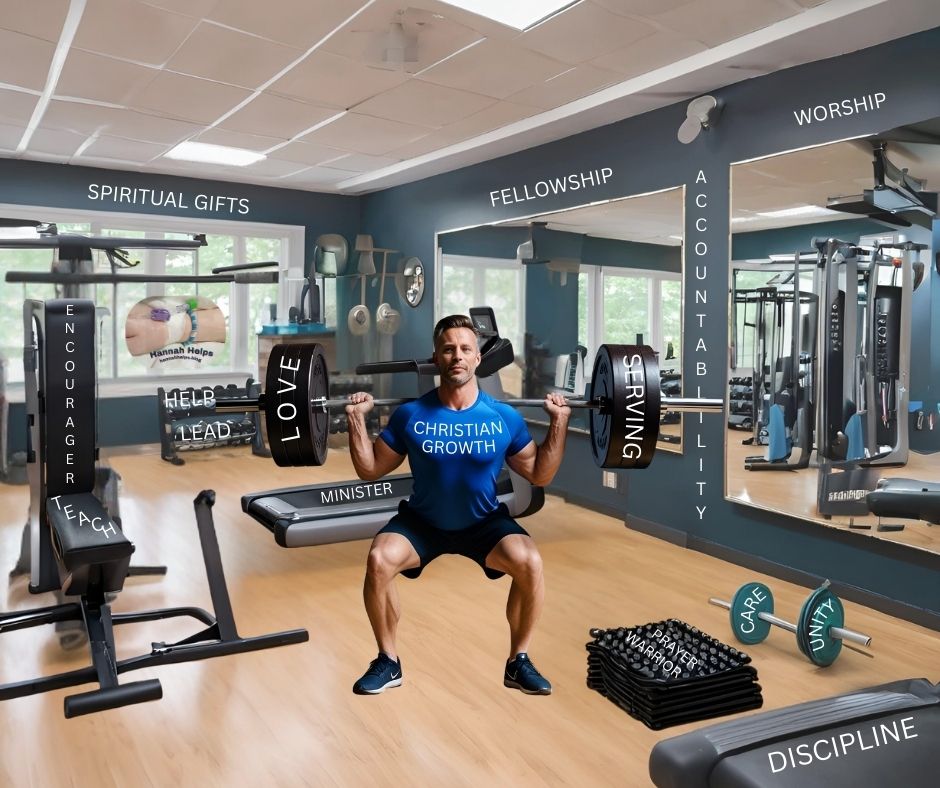
Although someone else filled in for Hannah last night and did a fine job, it was not the same for me. A big piece of my “body” is missing. Inversely, maybe a question could be asked, “If I were absent, would I be missed?” This question is more frequently asked at times when others hurt us or failures lead to self-pity, but it may be a better consideration the rest of the time. Am I making myself a productive part of a body? Am I building up that body with my presence and involvement? Are others around me functioning better because of me? Am I causing unity or division in my body? Although it’s not a “comely” member, as Paul put it, the absence of my small toe would cause an instability that would affect the rest of my body. Hannah actively involved herself and was a “body builder”. Are we doing our parts to build up others too?
We are blessed.
 Hannah Helps Blog